
Hey · Web3Education
Why is a passkey called a key when it behaves nothing like one? (A revisit of the passkeys post from October…
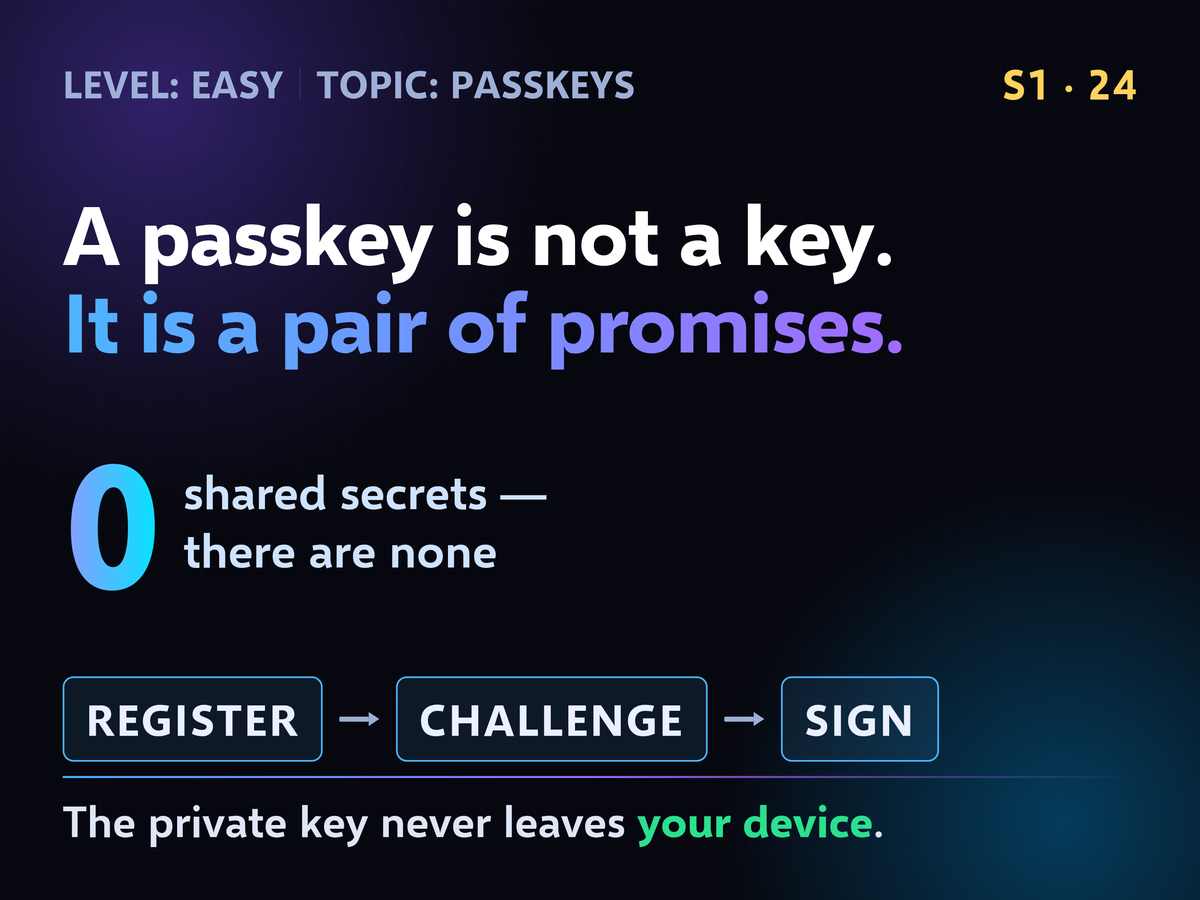
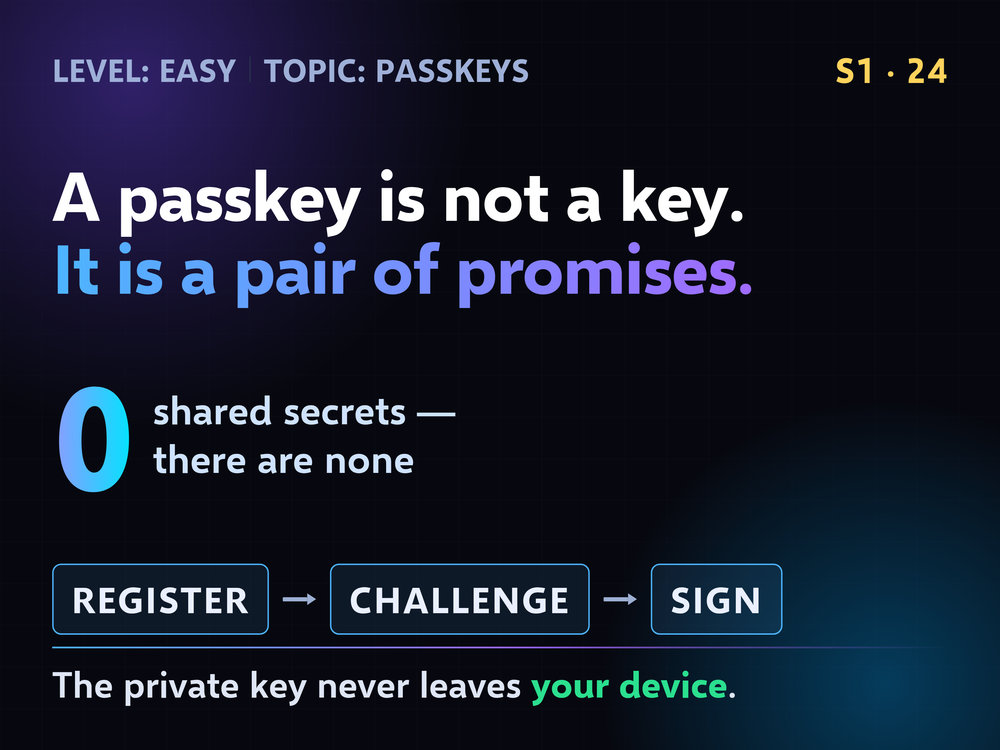
Why is a passkey called a key when it behaves nothing like one? (A revisit of the passkeys post from October — this time on its own, because one distinction deserves the whole post.) 🧩 A traditional key is a secret: one value that must be stored, moved, and never seen. A passkey replaces it with a key pair generated on your device. The private half never leaves it; only the public half is registered with the service. When you log in, the service sends a challenge, your device signs it, and the signature proves possession — of something that was never shared. 🔧 Two properties do the heavy lifting. First, origin binding: a passkey is created for a specific domain and simply will not respond to a lookalike — the homograph tricks from CASE 001 die at this layer. Second, no shared secret: there is nothing to phish, because the phisher needs a signature on their own challenge, and your device refuses to sign for a different origin. 💡 What I find fascinating about this: passkeys quietly delete the concept that made passwords dangerous. There is no password to reuse, no database of secrets to breach, no reset flow to hijack. The weakest link moved from "a string you must remember and they must guard" to "a device you must hold" — a much smaller, more physical attack surface. ✅ The practical consequence: logins become ceremonies you cannot get wrong. There is nothing to type, nothing to leak, and the device handles the cryptography. ⚠️ Trade-off is real: passkeys are bound to devices and ecosystems, so recovery becomes a platform question — if you lose the device, you depend on the vendor's sync or backup path. That moves power back toward a few large providers, which is exactly the dependency web3 was trying to escape. The honest summary: a passkey is not a better key. It is the removal of the key from the threat model — which is a bigger change than it sounds. The infographic below 👇 gives a quick visual if you're new to passkeys. #Ethereum #Passkeys #Security