
Hey · Web3Education
What does a validator actually do all day? Two things — and one of them pays better. Most people picture a va…
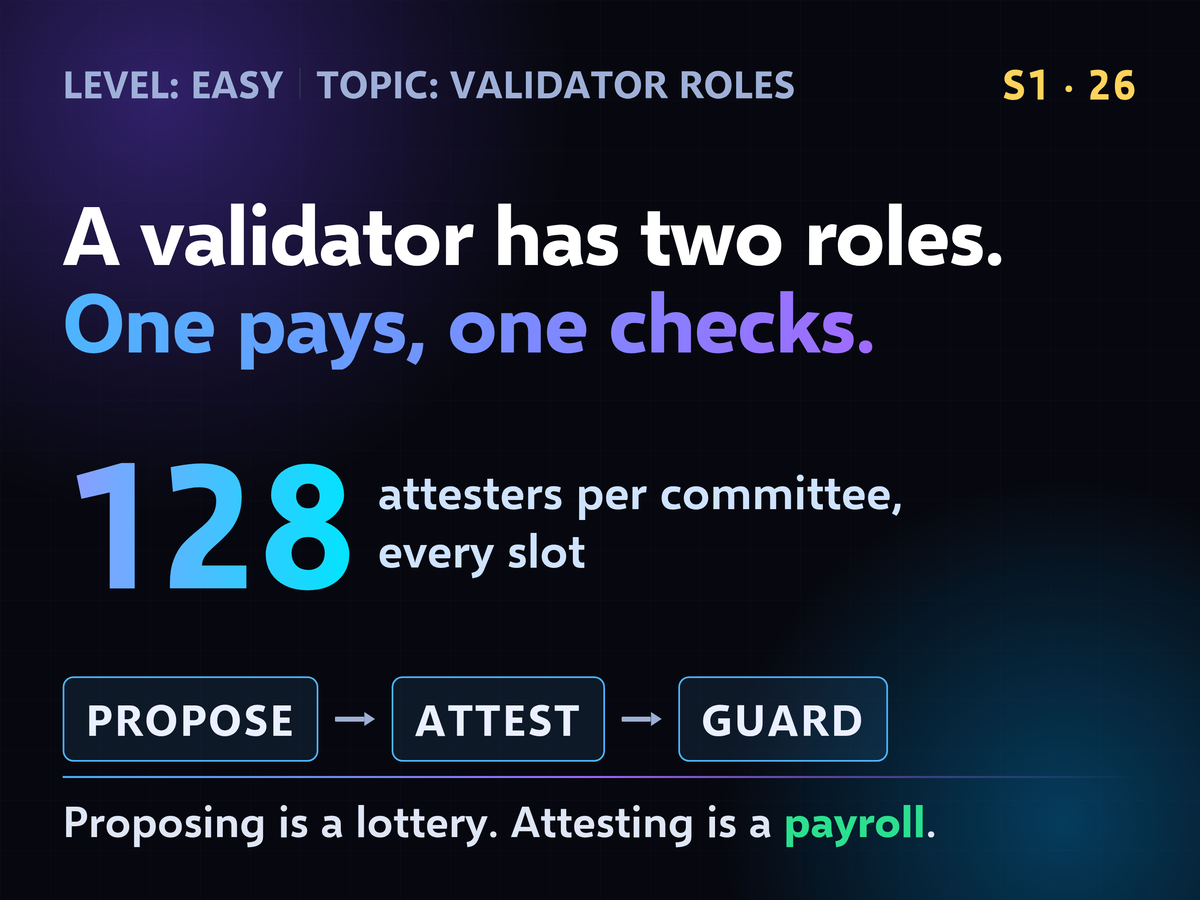
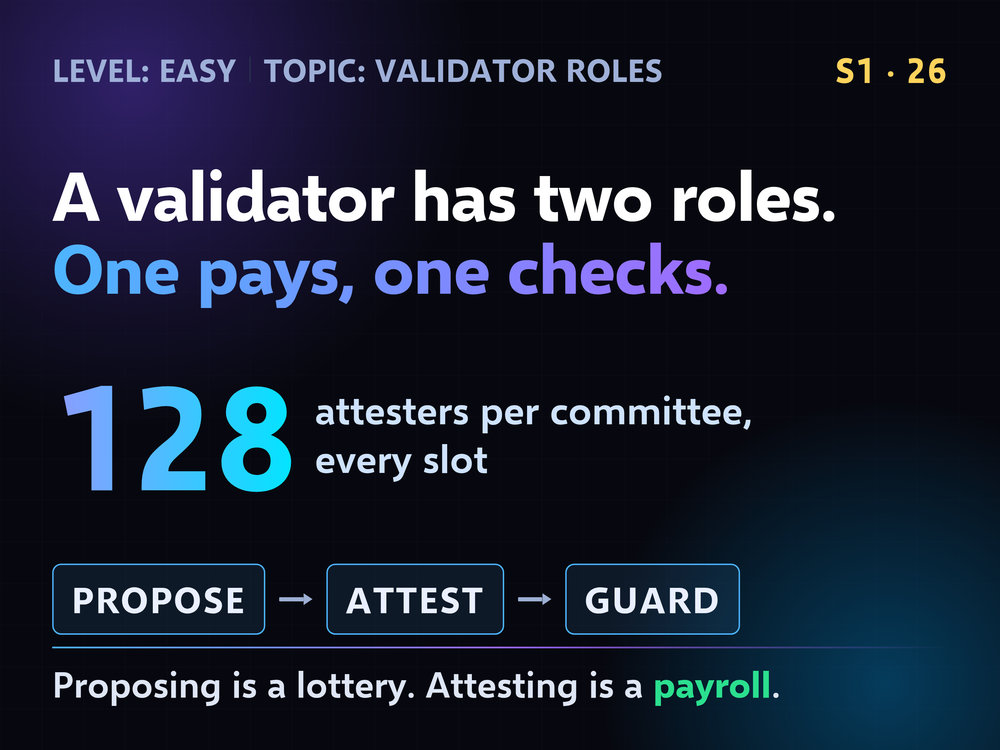
What does a validator actually do all day? Two things — and one of them pays better. Most people picture a validator as "the one who makes the block". That is only half the job, and it is the smaller half. Every validator has two separate roles, and the split between them explains how Ethereum stays fair. 🧩 Role one: proposing. Once in a long while, the protocol picks a validator to build and broadcast a block for one 12-second slot. Role two: attesting. Every slot, committees of 128 validators check the head of the chain and sign their agreement — this happens constantly, not once in a blue moon. 🔧 The economics make the asymmetry plain. Proposers get a share of the rewards plus tips from users, so a lucky proposer earns a lot in one slot. Attesters earn small, steady amounts, every epoch, for doing the checking. The proposer role is a lottery; the attester role is a wage. Ethereum needs both: proposals without attestations are unverified claims, and attestations without proposals have nothing to check. 💡 What I find fascinating about this: the two roles are balanced so carefully that neither dominates. The proposer cannot rewrite history — attesters would reject an invalid block. The attesters cannot invent content — only the proposer builds the block for that slot. Power is deliberately halved. ✅ The practical consequence: when you stake, you are signing up for both roles at once. Your 32 ETH makes you eligible for the lottery and for the payroll — and the second one is where the steady income comes from. ⚠️ Trade-off is real: rewards are weighted toward the attester role, which means the "exciting" proposer role is not where the steady income is. Miss an attestation and you bleed penalties quietly; miss a proposal and you just wait for the next turn. The honest summary: one role makes the chain grow. The other makes it count. Ethereum pays for both, on purpose — because a chain that only grows is a ledger nobody can trust. The infographic below 👇 gives a quick visual if you're new to validator roles. #Ethereum #Validators #Consensus