
Hey · AI
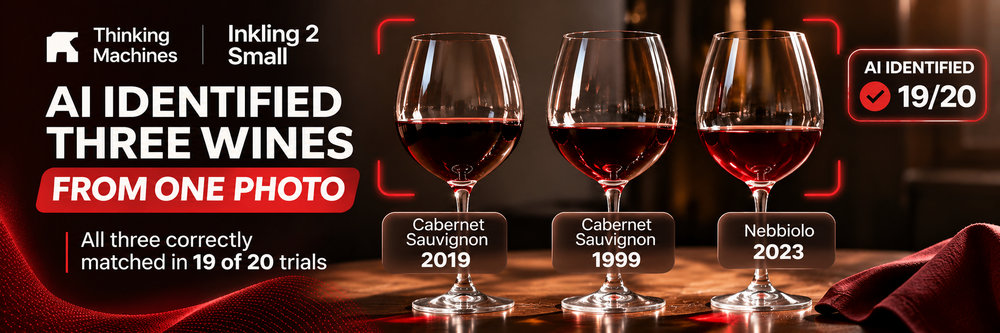
╭── ✦ 𝗜𝗡𝗞𝗟𝗜𝗡𝗚 𝟮 𝗦𝗠𝗔𝗟𝗟 ✦ ──╮ │ 𝗔𝗜 • 𝗪𝗜𝗡𝗘 • 𝟭𝟵/𝟮𝟬 ╰──────────────────────────╯ 🍷 AI identified three wines from…
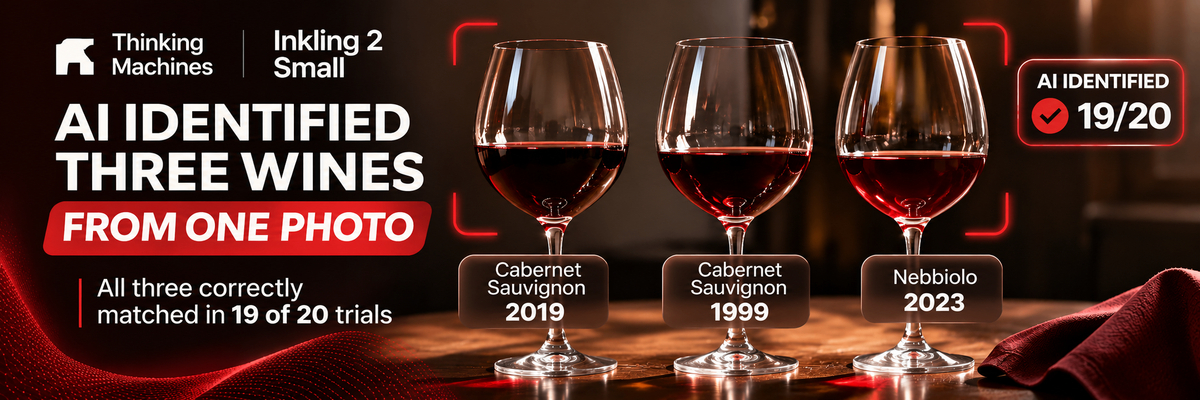
╭── ✦ 𝗜𝗡𝗞𝗟𝗜𝗡𝗚 𝟮 𝗦𝗠𝗔𝗟𝗟 ✦ ──╮ │ 𝗔𝗜 • 𝗪𝗜𝗡𝗘 • 𝟭𝟵/𝟮𝟬 ╰──────────────────────────╯ 🍷 AI identified three wines from a single photo in 19 out of 20 attempts. Sommeliers, take a look at this! Thinking Machines just introduced Inkling 2 Small, a 594-billion-parameter model, and gave it a rather unusual challenge. Three glasses of red wine: a 1999 Cabernet Sauvignon, a 2019 Cabernet Sauvignon, and a 2023 Nebbiolo. The challenge? Match each wine to its glass using nothing but a photograph. No tasting. No smelling. Just visual clues. The model analyzed color, translucency, lighting, and subtle differences in appearance. It correctly identified all three wines in 19 out of 20 trials, outperforming the company's researchers during their wine-tasting event. There's an important catch: the model was given the three possible wines in advance, and the experiment used a single photograph. This isn't proof that AI can identify arbitrary wines with 95% accuracy. Inkling 2 Small is already available through Tinker Playground. And while it has 594 billion total parameters, only 17 billion are active at a time.