
Prediction markets are currently the most accurate source of news. The legislative elections in Argentina are…
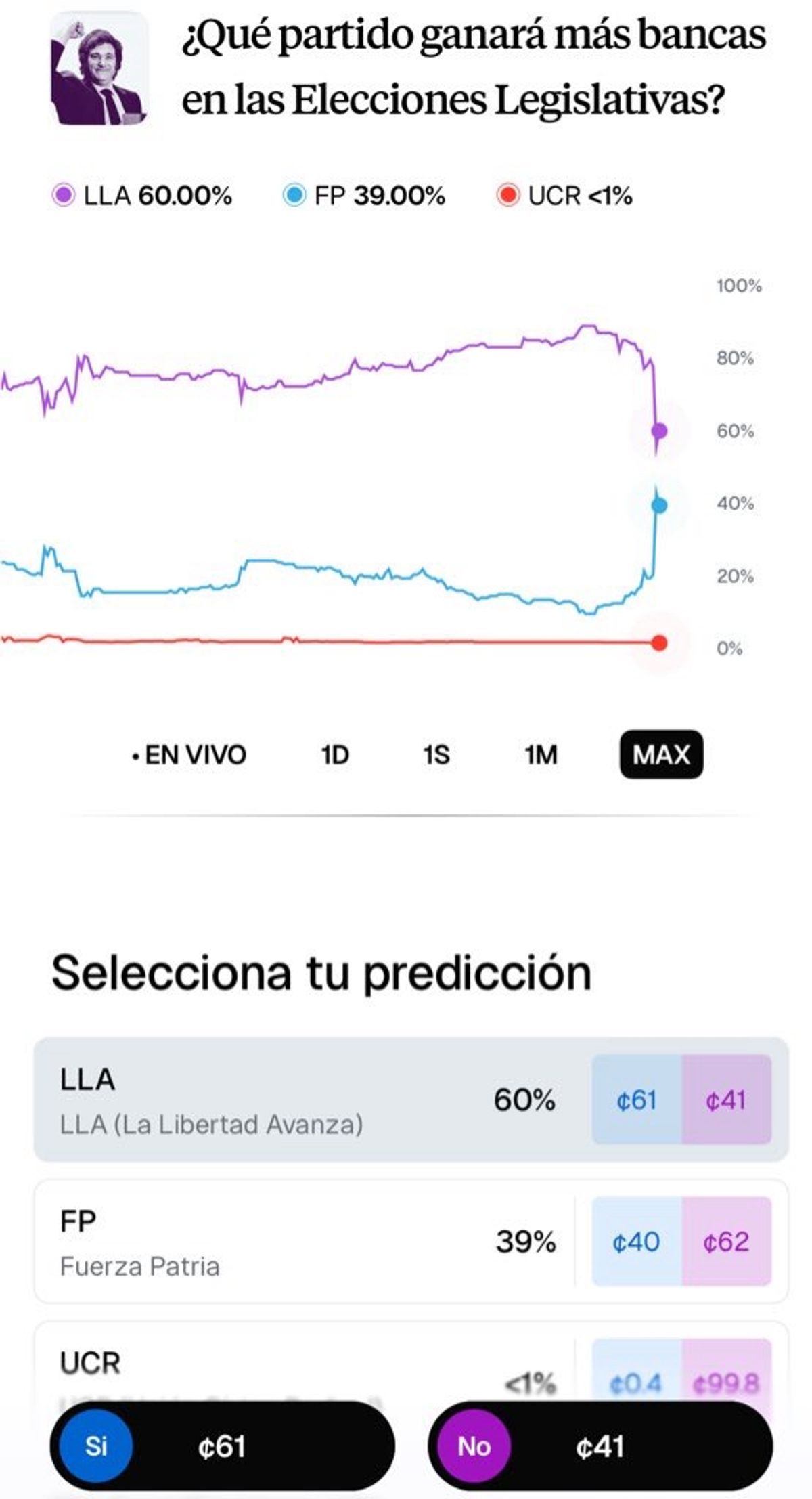
Prediction markets are currently the most accurate source of news. The legislative elections in Argentina are a great example: while traditional media publish polls often subject to methodological biases or editorial agendas, prediction markets provide a very different metric. Here, opinions aren’t free—each prediction carries money at stake. That forces participants to weigh available information, filter out the noise, and bear the cost of being wrong. More than just a poll, they function as a dynamic aggregation of collective expectations, where not only local voters but also global observers take part, all with incentives aligned toward accuracy. In a context of political uncertainty and growing distrust in traditional polls, it wouldn’t be surprising if, come October, people turn more to platforms like Polymarket or Berry to follow the elections than to news channels and their subjective forecasts. Prediction markets don’t replace politics nor eliminate the complexity of a country, but they do bring us closer to what many call the “real sentiment.”